Good Store or Glorified Garage Sale? How to Tell the Difference at a Glance
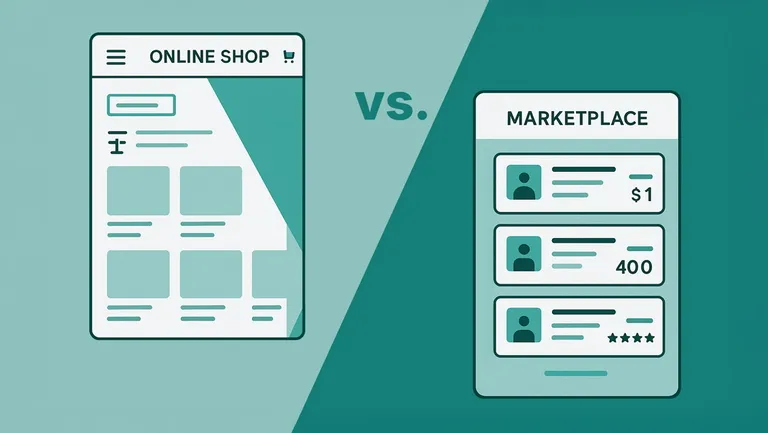
Photo: clean modern online store interface versus cluttered messy marketplace comparison, via www.esyon.net
Let's be real for a second. "One-stop shop" has become one of the most overused phrases in e-commerce. Every platform from the slickest lifestyle retailer to the sketchiest dropship operation slaps that label on itself and calls it a day. But there's a massive difference between a store that's genuinely built around your life and a digital flea market that just happens to sell both kitchen timers and motorcycle parts.
Knowing how to spot that difference? That's the skill that saves you money, time, and the specific frustration of receiving a package that looks nothing like what you ordered.
What a Real One-Stop Shop Actually Feels Like
Before we get into red flags, it's worth defining what good actually looks like — because it's easy to recognize once you know what to feel for.
A well-built all-in-one platform has a point of view. You can sense it within about thirty seconds of landing on the homepage. There's a reason the products are together. Maybe it's built around a particular lifestyle — outdoor living, minimalist home design, wellness-forward routines. Maybe it's organized around a customer type — the busy professional, the creative homebody, the practical parent. Whatever it is, there's a thread. The products feel like they were chosen, not just aggregated.
That intentionality shows up in the details. Product photography looks consistent. Descriptions actually explain why something matters, not just what it is. Categories make sense and don't overlap in confusing ways. The whole experience has a vibe — and that vibe is coherent.
The Cluttered Marketplace Tells on Itself Fast
On the flip side, chaotic marketplaces have a very distinct energy. Here's what to look for:
Wildly inconsistent product photography. If you're scrolling through a category and every image has a different background, lighting style, and quality level, you're likely looking at a platform that aggregates products from dozens of unrelated sellers without any editorial oversight. That's not inherently evil, but it means nobody's curating your experience — you're just browsing a database.
Category confusion. If a platform sells luxury candles, industrial power tools, and children's Halloween costumes with equal enthusiasm and no explanation, that's a sign. Breadth isn't automatically bad, but breadth without logic is a red flag. Ask yourself: who is this store for? If you can't answer that in one sentence, the store probably can't either.
Generic, copy-paste product descriptions. You've seen these. They read like they were translated from another language three times and then spell-checked by someone who'd never used the product. "This product is very good quality and will meet your satisfaction" is not a product description. It's a signal that no human being who actually cares about your purchase was involved in writing it.
Reviews that feel off. A flood of five-star reviews with no detail, all posted within a short window, with reviewer names that look randomly generated — that's a pattern worth noticing. Legitimate platforms tend to have reviews that reflect a real range of experiences, including the occasional honest three-star take.
Brand Storytelling: The Secret Ingredient
One of the clearest markers of a genuinely intentional shop is whether it has an actual story. Not a corporate mission statement full of buzzwords, but a real answer to the question: why does this place exist?
Great one-stop shops don't just sell things. They sell a version of how life could feel. Think about the retailers you actually love shopping from — there's usually something about the experience that makes you feel like the store gets you. That's not accidental. It's the result of deliberate choices about what to carry, how to present it, and what kind of customer they're building for.
When that storytelling is missing, you feel it. The homepage is a grid of unrelated promotions. The "About" page says something vague about "delivering value" and nothing about actual humans or a real perspective. The newsletter is just a weekly barrage of discounts with no personality attached. These aren't just aesthetic complaints — they're signs that the platform doesn't have a coherent identity, which usually means the product selection doesn't either.
Practical Questions to Ask Before You Commit
Next time you land on a new platform claiming to be your everything store, run through these quick gut-checks:
Can I describe this store's customer in one sentence? If yes, good sign. If you're stumped, be cautious.
Do the products feel like they were chosen or just collected? There's a difference between curation and aggregation. Curation involves someone making a judgment call. Aggregation is just pulling from a feed.
Is the return policy clear and reasonable? Trustworthy platforms make this easy to find and easy to understand. Sketchy ones bury it or make it intentionally complicated.
Does the site have a personality? Read a few product descriptions. Look at the homepage copy. Does it sound like a person wrote it, or does it sound like a content generator? Voice matters.
Are prices consistent with the quality being implied? If something looks high-end but is priced at a fraction of what comparable items cost elsewhere, ask why. Sometimes it's a great deal. Sometimes it's a quality mismatch waiting to happen.
The Takeaway
The best one-stop shops feel like they were built for you — like someone sat down and thought seriously about what your life looks like and what you actually need. The worst ones feel like someone stapled a bunch of product feeds together and hoped you wouldn't notice.
You can tell the difference pretty quickly once you know what to look for. Trust your gut when something feels off. And when a platform genuinely earns your trust — when the curation is smart, the experience is smooth, and everything feels like it belongs — that's the kind of place worth bookmarking.
That's the vibe worth shopping for.