Too Many Choices, Zero Decisions: The Surprising Science Behind Shopping Paralysis

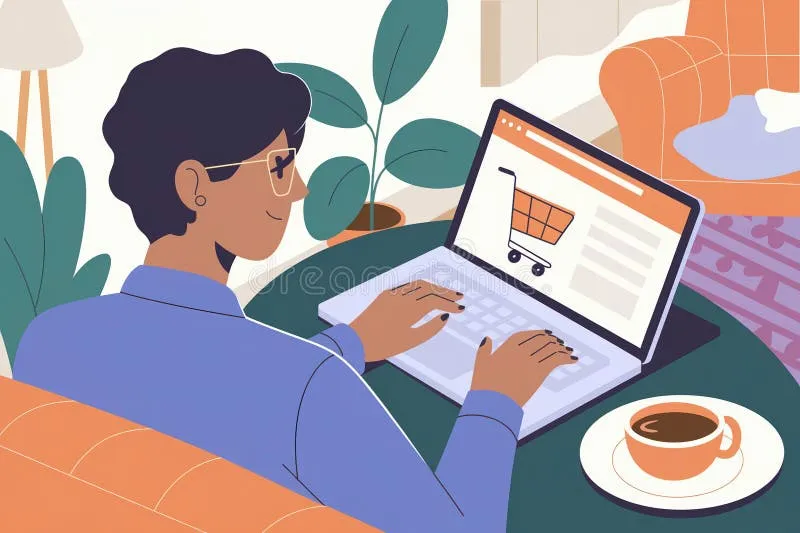
Photo: overwhelmed woman shopping online laptop too many choices, via img.freepik.com
Picture this: you open a tab to grab one thing — maybe a new phone charger, maybe a throw blanket — and ninety minutes later you've got sixteen browser tabs open, a cart full of stuff you're not sure about, and somehow you still haven't bought the thing you came for. Sound familiar? You're not disorganized. You're not indecisive. You're just human, and your brain is doing exactly what brains do when they're handed too many options at once.
Welcome to the one-stop shop paradox.
When More Becomes Less
There's a famous study from psychologists Sheena Iyengar and Mark Lepper that pretty much broke the retail world when it dropped back in 2000. They set up jam tasting booths at a grocery store — one with 6 options, one with 24. The bigger display drew more attention, sure. But the smaller one? It generated ten times more actual purchases.
That's not a typo. Ten times.
The concept they were poking at is called choice overload, and it's become one of the most well-documented phenomena in consumer psychology. The idea is simple: past a certain point, more options don't make us feel empowered. They make us feel stuck. Every additional option adds mental weight, and eventually your brain just... taps out.
Now scale that jam study up to a mega-retailer offering millions of SKUs across dozens of categories, and you start to understand why some days your cart feels less like a shopping basket and more like a therapy session you didn't sign up for.
Decision Fatigue Is a Real Thing (And It Gets Worse as the Day Goes On)
Here's another layer to this whole mess: your ability to make good decisions isn't a fixed resource. It depletes. Psychologists call it decision fatigue, and it explains why you're way more likely to impulse-buy something weird at 10 PM than you are at 10 AM.
Every choice you make — from what to eat for breakfast to which filter to apply to your Instagram story — chips away at your mental bandwidth. By the time you sit down to browse a store with thousands of product categories, you might already be running low. And when your decision-making tank is empty, you do one of two things: you make a reckless impulse purchase, or you make no purchase at all and close the tab feeling vaguely defeated.
All-in-one retailers are simultaneously a dream and a trap for this exact reason. The convenience is real. The overwhelm is also real.
The Paradox Nobody Talks About
Here's the uncomfortable truth that big retailers don't exactly advertise: having everything available can make it harder to buy anything at all. The promise of a one-stop shop is that you'll spend less time and energy on shopping. But if the browsing experience itself is a cognitive marathon, you've just traded one inconvenience for another.
This is especially true in categories where the differences between products are subtle or technical — think air purifiers, skincare serums, or laptop stands. When every option looks basically the same and the reviews are all suspiciously glowing, your brain has no clean signal to grab onto. So it freezes.
Retailers know this, by the way. It's part of why things like "Best Seller" badges, "Editor's Pick" labels, and curated collections exist — they're decision shortcuts, little lifelines thrown to shoppers who are drowning in options.
Practical Ways to Shop Smarter Without Losing Your Mind
So what do you actually do about this? A few strategies that genuinely help:
Set a search intention before you open the app. Sounds basic, but it works. Before you start browsing, write down — physically write it — what you're looking for and roughly what you're willing to spend. It gives your brain a filter to work with.
Use sorting and filtering like they're your best friend. Most shoppers ignore filters entirely or only use them halfway. Price range, average rating, specific features — the more you narrow the field before you start reading descriptions, the less cognitive load you're carrying.
Give yourself a time limit. Seriously. Set a fifteen-minute timer for browsing. When it goes off, you either buy what's in your cart or you leave and come back fresh. Endless browsing sessions are where decision fatigue really digs in.
Ignore the "also viewed" rabbit holes. Those "customers also bought" sections are engineered to extend your session, not improve your purchase. They're fine to glance at, but don't let them pull you off course when you were two clicks from checking out.
Trust the boring choice sometimes. The highest-rated, mid-priced, well-reviewed option is usually fine. The search for the perfect product is often the enemy of getting a good product that you'll actually use and enjoy.
The Vibe of Shopping Well
At its best, a one-stop shop should feel like having a really well-stocked friend — someone who's got what you need without making you wade through a warehouse to find it. The platforms that nail this aren't just throwing everything at you and hoping something sticks. They're thinking about flow, about curation, about what it actually feels like to browse.
The next time you find yourself spiraling in a product category you didn't intend to spend an hour in, don't blame yourself. Blame the paradox. Then close a few tabs, narrow your filters, and remember: the goal was never to see everything. The goal was to find the one thing that makes your life a little bit better.
That's a much easier target to hit.