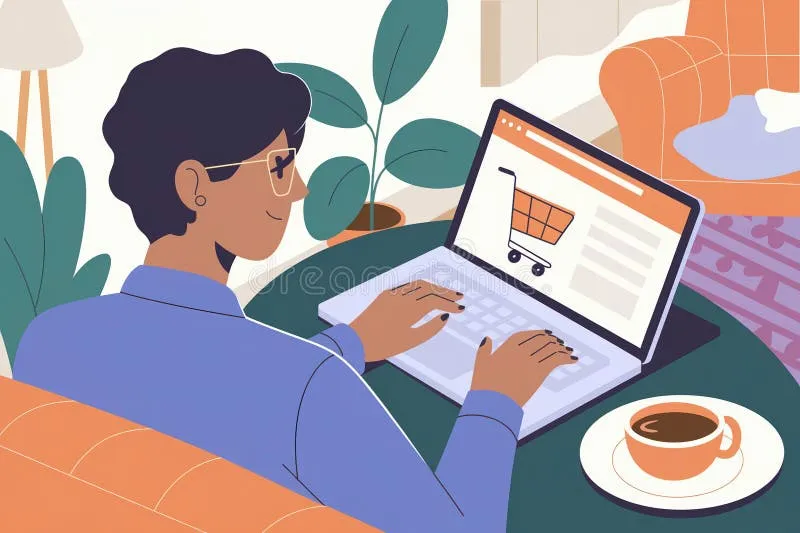
What Your Cart Reveals That Your Therapist Is Still Trying to Figure Out

Photo: Credit: Image: European Space Agency & NASA Acknowledgements: Project Investigators for the original Hubble data: K.D. Kuntz (GSFC), F. Bresolin (University of Hawaii), J. Trauger (JPL), J. Mould (NOAO), and Y.-H. Chu (University of Illinois, Urban
You've spent $200 on a therapy session trying to understand why you self-sabotage. Meanwhile, your shopping cart has been quietly holding the receipts — literally — this whole time. Consumer psychologists have been saying it for years: the way you shop is a mirror. Not a flattering one, necessarily, but an honest one.
At ShopVibe, we're all about the full picture — everything you need, all in one place, including, apparently, a window into your own psyche. So let's dig into what your purchasing patterns are actually telling the world (and maybe yourself).
The Midnight Add-to-Cart Spiral
If you've ever found yourself at 1:47 a.m. loading up a cart with items that range from a foam roller to a pasta maker to a set of linen curtains, you're not alone — and you're not random. Research from behavioral economists at MIT suggests that late-night shopping sessions correlate strongly with elevated stress levels and a psychological phenomenon called compensatory consumption. Basically, your brain is trying to solve an emotional problem with a logistical solution.
The product mix matters too. People who add aspirational items — fitness gear, organizational tools, cookbooks — alongside comfort purchases like snack subscriptions or cozy blankets tend to be in a transitional life phase. They're caught between who they are and who they're trying to become. Sound familiar?
How You Pay Says a Lot
Here's one nobody talks about enough: your payment method is basically a financial personality test.
- Credit card, no hesitation? You're optimistic, sometimes to a fault. You believe future-you will handle it. You're also statistically more likely to spend 18% more per transaction than cash or debit users, according to a study published in the Journal of Consumer Research.
- Buy Now, Pay Later (BNPL) like Klarna or Afterpay? You're pragmatic, budget-conscious, but also susceptible to stretching your limits when the friction is removed. BNPL users are disproportionately millennials navigating a weird economic middle ground — wanting quality but managing tight margins.
- PayPal or digital wallets? You value speed and don't like thinking too hard about money in the moment. You're efficient, maybe a little avoidant.
- Debit card, always? You're grounded, disciplined, and probably the person in your friend group who actually has an emergency fund.
None of these are judgments — they're just patterns. And patterns tell stories.
The Cart Abandonment Confession Booth
About 70% of online shopping carts are abandoned before checkout, according to data from the Baymard Institute. Seventy percent. That's not a checkout problem — that's a human problem.
What you leave behind in a cart is almost more revealing than what you buy. Cart abandonment breaks down into a few psychological archetypes:
The Window Shopper with Commitment Issues loads a cart the way some people make Pinterest boards — it's fantasy, not intention. The cart is a mood board. Buying would somehow ruin it.
The Practical Delayer genuinely intends to buy but wants to sleep on it. They're disciplined, slightly anxious about spending, and probably comparison-shop obsessively. They'll be back — maybe.
The Shipping Fee Avoider was totally on board until that $6.99 delivery charge showed up. This person has a deep, almost irrational aversion to feeling like they're being nickeled and dimed. It's not about the money — it's about the principle.
The Overwhelmed Optimizer added twelve versions of the same product, couldn't decide, and bailed entirely. Classic analysis paralysis, usually paired with high conscientiousness and perfectionist tendencies.
Your Browsing Path Is a Personality Map
The route you take through an online store — or a place like ShopVibe where the inventory spans basically everything — is genuinely illuminating. Do you use the search bar immediately, knowing exactly what you want? You're goal-oriented and a little impatient. Do you browse categories, letting curiosity lead? You're exploratory, open to discovery, and probably a decent conversationalist at parties.
People who filter obsessively (by price, rating, color, brand) before looking at a single product tend to score high in what psychologists call need for cognition — they love processing information and feel uncomfortable making decisions without data. People who scroll fast, stop on visuals, and decide quickly are often high in intuition and low in buyer's remorse, interestingly enough.
The Aspirational Basket vs. The Practical Cart
There's a meaningful difference between what you put in your cart and what you actually buy. Researchers call this the want/should conflict. People add aspirational products — the standing desk, the meditation app subscription, the air fryer — but when checkout arrives, they often swap them out for the familiar and comfortable.
The gap between your aspirational cart and your actual order? That's the gap between who you think you should be and who you currently are. It's not a character flaw. It's just human.
But here's the thing — tracking that gap over time actually tells you something useful. If your aspirational cart items keep showing up but never converting, maybe they're not what you actually want. Maybe they're what you think you're supposed to want. That's useful data, even if it stings a little.
So What Do You Do With This?
The point isn't to turn your shopping history into a shame spiral. It's to get curious. Next time you're halfway through a cart at 11 p.m. with a weird mix of productivity tools and comfort food, pause for a second. Ask yourself what you're actually shopping for.
Sometimes it's the pasta maker. Sometimes it's a sense of control in a chaotic week. Both are valid. But knowing the difference? That's where the real vibe check happens.
Your cart doesn't lie. Might as well listen to it.